Showing posts with label mystery. Show all posts

10 fun psychological fact about Human Behaviour
Psychology is the scientific study of human mind and behaviour: how we think, feel, act and interact individually and in groups. An understanding of how behaviour difficulties develop and are maintained is an essential prerequisite to providing appropriate support for pupils in our schools.
Dreams are mostly fascinating, exciting, terrifying, Mysterious, bewildering, eye-opening and sometimes a nightmarish living hell or just plain weird. dreams are all that and much more.Here are 10 amazing facts about dreams that you might have never heard about.
10. Not everyone dreams in color
While approximately 80 percent of all dreams are in color, there are a small percentage of people who claim to only dream in black and white.As much as 12% of people only dream in black and white.
9. Blind people dream too
Blind people who were not born blind see images in their dreams but people who were born blind don’t see anything at all. They still dream, and their dreams are just as intense and interesting, but they involve the other senses beside sight.
8. You can linger in a dream after waking.
Have you ever woken up from such a beautiful, perfect dream that you wished you could go back to sleep to soak it all up (you know, the dream about George Clooney?)? You can! Just lie still—don’t move a muscle—and you can remain in a semi-dreamlike state for a few minutes. “The best way to remember your dreams is to simply stay put when you wake up,” says Loewenberg. “Remain in the position you woke up in, because that is the position you were dreaming in. When you move your body, you disconnect yourself from the dream you were just in seconds ago.”
7. You Forget Most of Your Dreams
95 percent of all dreams are quickly forgotten shortly after waking.You can have up to seven different dreams per night depending on how many REM (Rapid Eye Moment) cycles you have. We only dream during the REM period of sleep, and the average person dreams one to two hours every night.
6. Dreams tend to be negative
Surprisingly, dreams are more often negative than positive. The three most widely reported emotions felt during dreaming are anger, sadness and fear.
5. You can’t tell time or Read while Dreaming
If you are unsure whether you are dreaming or not, try reading something. The vast majority of people are incapable of reading in their dreams. The same goes for clocks: each time you look at a clock it will tell a different time and the hands on the clock won’t appear to be moving as reported by lucid dreamers.
4. You Can Control Your Dreams
There is a whole subculture of people practicing what is called lucid or conscious dreaming. Using various techniques, these people have supposedly learned to assume control of their dreams and do amazing things like flying, passing through walls, and traveling to different dimensions or even back in time.
3. In our dreams we only see faces that we already know
The human brain is responsible for many complex creations, but it can’t invent the image of people. So the “strangers” that you meet in your dreams actually have the faces of people who you’ve once seen in your real life but forgotten, like your childhood mailman or that guy bumped into on the side walk that one time.
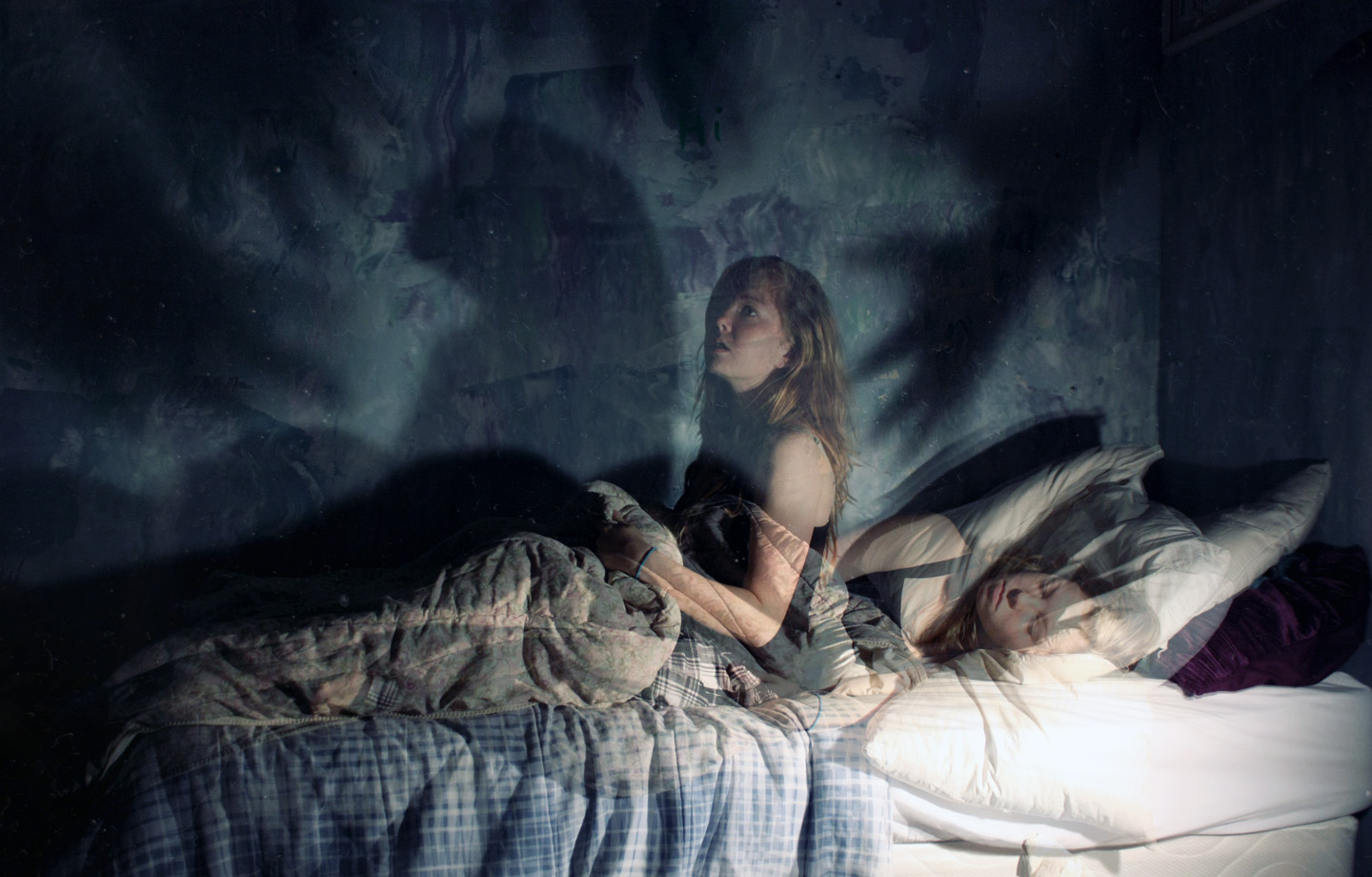 2. Sleep paralysis
Two characteristics of sleep paralysis are the inability to move (hence paralysis) and a sense of an extremely evil presence in the room with you. It doesn't feel like a dream, but 100% real. IT amplify the emotions of fear, terror and anxiety.
Enough Said!!!
1. Dream drug
There are actually people who like dreaming and dreams so much that they never want to wake up. They want to continue on dreaming even during the day, so they take an illegal and extremely potent hallucinogenic drug called Dimethyltryptamine. It is actually only an isolated and synthetic form of the chemical our brains produce naturally during dreaming.
The supposed communication of thoughts or ideas by means other than the known senses.
Scientific consensus does not view telepathy as a real phenomenon. Many studies seeking to detect, understand, and utilize telepathy have been done, but according to the prevailing view among scientists, telepathy lacks replicable results from well-controlled experiments
Origins of the concept

According to Roger Luckhurst,[8] the origin of the concept of telepathy (not telepathy itself) in the Western civilization can be tracked to the late 19th century. In his view, science did not frequently concern itself with "the mind" prior to this. As the physical sciences made significant advances, scientific concepts were applied to mental phenomena (e.g., animal magnetism), with the hope that this would help understand paranormal phenomena. The modern concept of telepathy emerged in this context.
Psychological symbiosis, on the other hand, is a less well established concept. It is an idea found in the writings of early psychoanalysts, such as Melanie Klein. It entails the belief that in the early psychological experience of the child (during earliest infancy), the child is unable to tell the difference between his or her own mind, on one hand, and his or her experience of the mother/parent, on the other hand. This state of mind is called psychological symbiosis; with development, it ends, but, purportedly, aspects of it can still be detected in the psychological functioning of the adult. Putatively, the experience of either thought insertion/removal or unconscious memories of psychological symbiosis may have led to the invention of "telepathy" as a notion and the belief that telepathy exists. Psychiatrists and clinical psychologists believe and empirical findings support the idea that people with schizotypal personality disorder are particularly likely to believe in telepathy.
Case studies
A famous experiment in telepathy was recorded by the American author Upton Sinclair in his book Mental
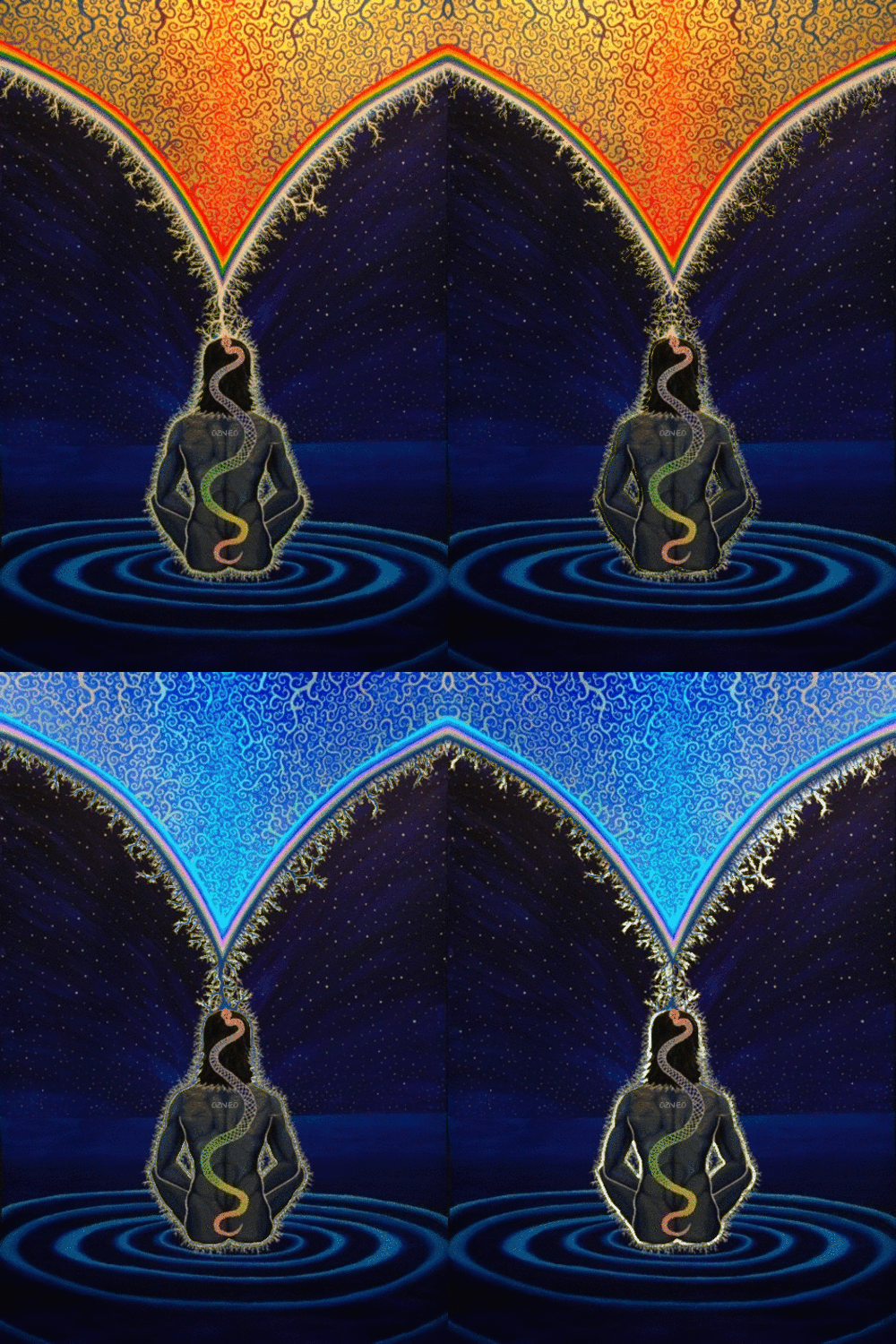
Another example is the experiments carried out by the author Harold Sherman with the explorer Hubert Wilkins who carried out their own experiments in telepathy for five and a half months starting in October 1937. This took place when Sherman was in New York and Wilkins was in the Arctic. The experiment consisted of Sherman and Wilkins at the end of each day to relax and visualise a mental image or "thought impression" of the events or thoughts they had experienced in the day and then to record those images and thoughts on paper in a diary. The results at the end when comparing Sherman's diary to Wilkins was that "Seventy-five per cent were found to be correct". A typical example was on 21 February 1938. On that day, both Sherman and Wilkins had recorded that cold weather had delayed their jobs, they both had witnessed that someone's skin had peeled off their finger, they both recorded that they had drunk alcohol with friends and witnessed boxes of cigars being brought and both recorded that they had experienced a toothache.[11][12]
To rule out any kind of fraud, each night Sherman had sent his impressions to Gardner Murphy, a psychologist at Columbia University. Murphy had studied the Wilkins-Sherman results and claimed that some could be explained by coincidence but that some exceptions were unexplainable. One such example took place on Armistice Day, 1937. Wilkins had attended a formal ball for the Army with the locals in Canada as his plane was forced to land due to bad weather, Wilkins recorded that he was worried about a dress-suit that he had to wear as the waistcoat was short in size.[13] On the same night, Sherman recorded in his diary "You in company with men in military attire-some women-evening dress-important people present-much conversation-you appear to be in evening dress yourself."[13] Wilkins was very impressed by the results and wrote that:
"When we finally were able to compare notes, what did we find? An amazing number of impressions recorded by Sherman of expedition happenings, and personal experiences, reactions and thoughts of mine. Too many of them were approximately correct and synchronized with the very day of the occurences to have been 'guesswork'."
In popular culture
Telepathy is commonly used in fiction, with a number of superheroes and supervillains, as well as figures in many science fiction novels, etc., use telepathy. The mechanics of telepathy in fiction vary widely. Some fictional telepaths are limited to receiving only thoughts that are deliberately sent by other telepaths, or even to receiving thoughts from a specific other person. For example, inRobert A. Heinlein's 1956 novel Time for the Stars, certain pairs of twins are able to send telepathic messages to each other. In A. E. van Vogt's science fiction novel Slan, the mutant hero Jommy Cross can read the minds of ordinary humans.
Déjà vu, from French, literally "already seen", is the phenomenon of having the strong sensation that an event or experience currently being experienced has been experienced in the past, whether it has actually happened or not.


Scientific research
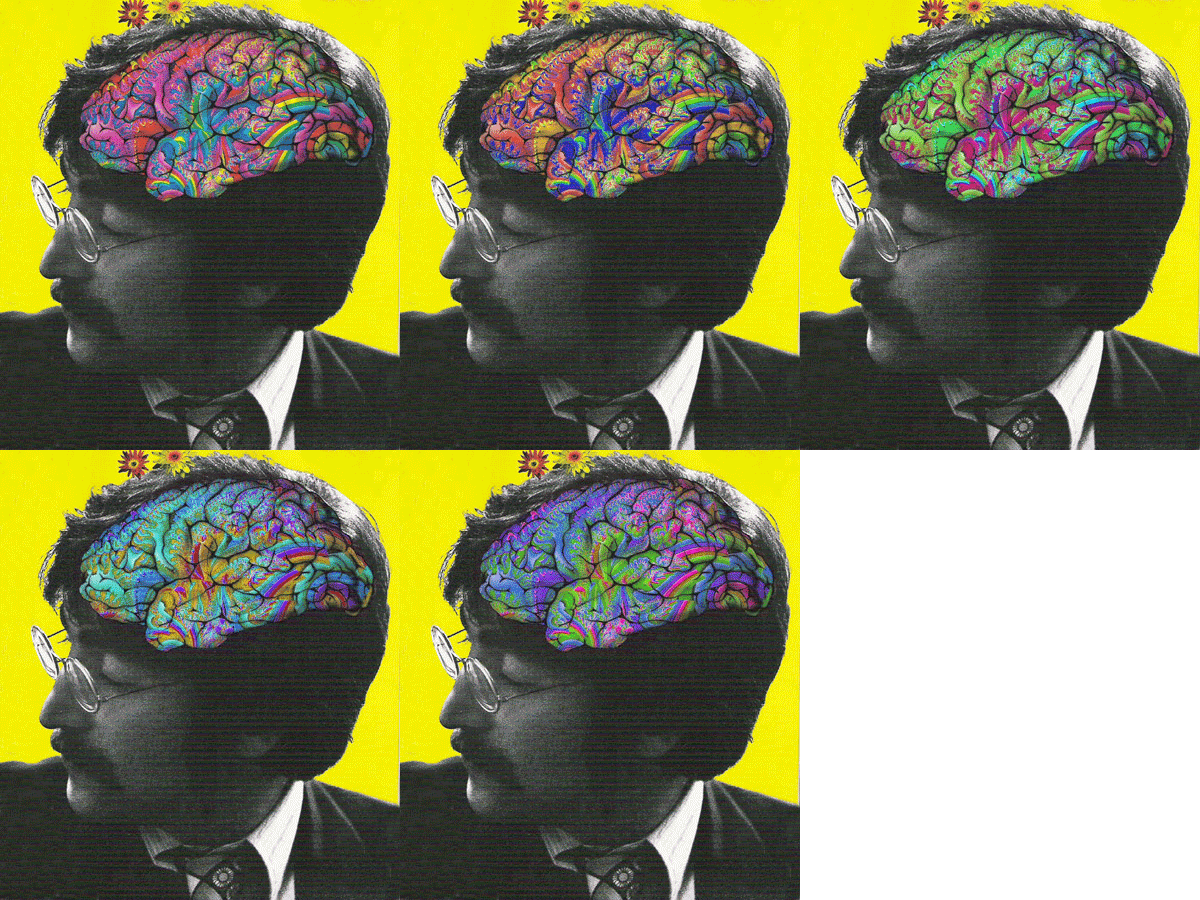
The psychologist Edward B. Titchener in his book 1928 A Textbook of Psychology, explained déjà vu as caused by a person having a brief glimpse of an object or situation, before the brain has completed "constructing" a full conscious perception of the experience. Such a "partial perception" then results in a false sense of familiarity.[1] The explanation that has mostly been accepted of déjà vu is not that it is an act of "precognition" or "prophecy", but rather that it is an anomaly of memory, giving the false impression that an experience is "being recalled".
One theory is the events are stored into memory before the conscious part of the brain even receives the information and processes it.[4] However, this explanation has been criticized that the brain would not be able to store information without a sensory input first. Another theory suggests the brain may process sensory input (perhaps all sensory input) as a "memory-in-progress", and that therefore during the event itself one believes it to be a past memory. In a survey, Brown had concluded that approximately two-thirds of the population have had déjà vu experiences.
Other Theories
The Hologram Theory
Dutch psychiatrist Hermon Sno proposed the idea that memories are like holograms, meaning that you can recreate the entire three-dimensional image from any fragment of the whole. The smaller the fragment, however, the fuzzier the ultimate picture. Déjà vu, he says, happens when some detail in the environment we are currently in (a sight, sound, smell, et cetera) is similar to some remnant of a memory of our past and our brain recreates an entire scene from that fragment.
Other researchers also agree that some small piece of familiarity may be the seed that creates the déjà vu feeling. For example, you might go for a ride with a friend in an old 1964 Plymouth and have a strong déjà vu experience without actually remembering (or even being aware of the fact) that your grandfather had the same type of car and you're actually remembering riding in that car as a small child. Things like the smell and the look and feel of the seat or dashboard can bring back memories you didn't even know you had.
Dual Processing (or Delayed Vision)

Another theory is based on the way our brain processes new information and how it stores long- and short-term memories. Robert Efron tested an idea at the Veterans Hospital in Boston in 1963 that stands as a valid theory today. He proposed that a delayed neurological response causes déjà vu. Because information enters the processing centers of the brain via more than one path, it is possible that occasionally that blending of information might not synchronize correctly.
Efron found that the temporal lobe of the brain's left hemisphere is responsible for sorting incoming information. He also found that the temporal lobe receives this incoming information twice with a slight (milliseconds-long) delay between transmissions -- once directly and once again after its detour through the right hemisphere of the brain. If that second transmission is delayed slightly longer, then the brain might put the wrong timestamp on that bit of information and register it as a previous memory because it had already been processed. That could explain the sudden sense of familiarity.
"Memories" From Other Sources
This theory proposes that we have many stored memories that come from many aspects of our lives, including not only our own experiences but also movies, pictures we've seen and books we've read. We can have very strong memories of things we've read about or seen without actually experiencing, and over time, these memories may be pushed back in our minds. When in we see or experience something that is very similar to one of those memories, we might experience a feeling of déjà vu.
For example, as a child we may have seen a movie that had a scene in a famous restaurant or at a famous landmark. Then, as an adult, we visit the same location without remembering the movie, and the location appears to be very familiar to us.
have you thought this stuff was just for dragon ball and street fighter and all that other stuff but aprently there are people out there who really thinks that ki and chi real and that they can control it ? sounds crazy, right ?

1) Chi doesn't exist. Everything the chi model tries to explain can be explained withbody mechanics, biophysics, and psychology. There is no need to postulate some mysterious force. Science can explain it.
2) Chi exists absolutely. Chi is an energy, a living force, a spirit that can be used to increase your strength, throw people around, etc. Subjective experience shows that ki is real. It may either be a bio-kinetic phenomena science doesn't understand yet or the power of the mind in union with the body.
3) Chi may or may not "really" exist. It is a useful model. The chi model allows you to visualize how to increase your strength, throw people around, etc.--it doesn't matter if it exists or not. If someone invents a better model (i.e. one that is easier to visualize), then maybe we'll switch to it.
In Chinese philosophy they talk of a force called Chi. It's an electrical current that runs through your body,everything around you, and Earth.
I'm thinking maybe they weren't wrong. There is an electrical current that runs through you. It's the currents of your nervouce system. his may be what they were talking about.
Also there is a current that runs through your body. Just like theres 14 pounds of air per sqaure ince of your body there's lots ofelectrcity running through us. We're used to it so we don't feel anything. I'm wondering could this be CHi also.
For anyone who doesn't know of the "great" martial artist with psychic power named John Chang, here is his video. http://www.youtube.com/watch?v=Aos0hnwiHt8
And here is the explanation.
On first viewing, Chang appears to be doing a few simple carnival tricks:
1. "Generating electricity" - this is normally done with the use of a small high-frequency, high-voltage, low-amperage device taped to the performer's body. James Randi mentions this device here, regarding others who have done this:
Randi wrote:This “chi” scam artist on YouTube is probably using the very same setup as the Malaysian crook did, a small battery-powered device worn on the body that develops very high voltage at very low amperage, that can be directed from the body of the performer to anything that’s at a lower potential than he is. It’s a form of Tesla coil, and it’s very effective. There’s also a rabbi in New York using this same gimmick to convince the faithful…
2. Catching a "rifle bullet" - what is shown is the firing of a very low-speed pellet that can pierce the wall of an empty soda can. Then, Chang puts his hand in front of the gun. He is in no danger, and there does not appear to be anything extraordinary about what he is doing.
3. Moving a knife - Chang carefully balances a knife on its sheath. It is shown moving slightly in one direction, twice. With such a precariously-balanced object, the slightest breeze will move it readily. All Chang has to do is wait a bit. In the first movement, he has his mouth close to the knife, "talking" to it. In the second, he has leaned back, so either he's caught a breeze, or he started the knife in a position that would naturally swing away, or else he's using his knee (either one would work, but it's hard to tell from that angle which, if either, is in position), to slightly lift the glass tabletop.
4. "Fooling the experts" - they have a CEO, a doctor, and a physicist. They really needed an electrical engineer. They try to use an ordinary volt meter. If he's using the high-frequency device, of course they will not get readings from this! Some experts they are!
 Maybe they actually do use the metal detector on his back and feet to check for the device, but this is not shown. :roll: Chang seems to be flexing his back to produce his electricity. I would check between his shoulder blades. I mean, they strip him almost naked, but they let him leave his shirt on?!? Oh, and the color-changing LEDs have different colors depending on the direction of the current, not the amount.
5. "Chopstick through the table" - has anything ever looked more like a set-up magic trick? First, he takes them to his local restaurant. Then he can't make the "chi" work on Formica, so he needs to use the bottom of the table. This trick requires nothing more than a cheap table with a seam in the wood.
As miracles go, I can't say I'm impressed.
All over the world there are giant stone monuments. Almost everyone knows they were created thousands of years ago by ancient man.

But could almost everyone be wrong about the pyramids, Aztec Temples, Stonehenge?
There are a few nagging questions, like why do they seem to appear out of the blue around the same time?
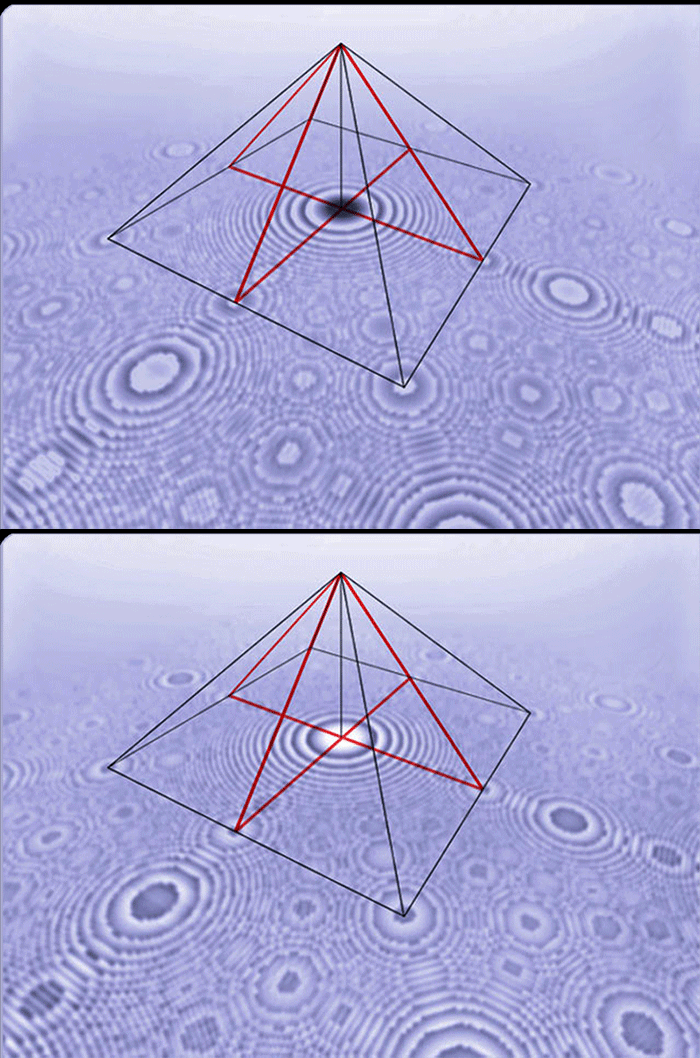
How did the Giza Pyramids attain alignment with true North with an accuracy within 1/10 of a degree?
It’s a mystery that might be solved if you believe aliens influenced our society by providing the information needed to move and erect these massive stone objects.
There is no evidence that aliens built the Egyptian pyramids that is not better in quality or quantity than evidence that the Egyptians built them all by themselves.
Get that?
Evidence that aliens did it = small, not good, mostly (if not all) theoretical
Evidence that people did it = lots of it, high quality, empirical
Now this isn't to say that a big, shiny UFO might not be dug up from under a pyramid someday, but that hasn't happened yet. It may not ever happen.
And it wasn't human beings who built pyramids, it was a society of humans that did it. We've got plans, we've got ancient blueprints, we've got hundreds and hundreds of housing projects near the pyramids where the workers lived. We've got lines of increasingly impressive pyramids being built over a long period of time. The really great pyramids at Giza weren't a first attempt. They were the pinnacle of a long history of Egyptian pyramid building.
Get that?
Evidence that aliens did it = small, not good, mostly (if not all) theoretical
Evidence that people did it = lots of it, high quality, empirical
Now this isn't to say that a big, shiny UFO might not be dug up from under a pyramid someday, but that hasn't happened yet. It may not ever happen.
And it wasn't human beings who built pyramids, it was a society of humans that did it. We've got plans, we've got ancient blueprints, we've got hundreds and hundreds of housing projects near the pyramids where the workers lived. We've got lines of increasingly impressive pyramids being built over a long period of time. The really great pyramids at Giza weren't a first attempt. They were the pinnacle of a long history of Egyptian pyramid building.
 It has always pained me a great deal that so many people all over the world are genuinely fascinated by ancient Egypt and yet they are so woefully misinformed by sensationalist media, so-called documentaries based in pseudoscience, and the fantasy world of Hollywood. No other ancient civilization is so universally recognized and yet so thoroughly misunderstood. Sadly, Egyptologists are often so frustrated by this that they want nothing to do with the situation; it’s not just a matter of educating people, it’s completely reeducating them—trying to reverse the damage caused by ‘The Mummy’ and even the Discovery Channel.
People say that since we wouldn’t be able to build pyramids today, that the Egyptians couldn’t have done it, but it’s not just building of the pyramids that couldn’t be replicated today. It’s hard to imagine ever being able to pull together the resources, power, money, skilled craftsmen, and architects needed to build one of the great gothic cathedrals in this day and age. It just couldn’t happen. This isn’t something to be ashamed of though, we simply use different technologies and have different priorities these days. While we couldn’t build another Notre Dame Cathedral or Great Pyramid, modern structures like the Eiffel Tower or the Gherkin wouldn’t have been possible back then either. Pyramids were possible simply because the entire economy, resources, and population of the Egyptian civilization was under the control of a single omnipotent ruler, who could mobilize them all into a monumental building project.
Referring to the alien theory, someone states: ‘It’s the most sensible theory. Why would ancient Egyptians build such monstrosities just to bury their kings?’ Alien theorists say that it’s a mystery why the Egyptians or other ancient people would build such immense monuments. Therefore, it must have been aliens. But why on earth would the aliens want to build these monuments? And on earth? That makes even less sense.
Since Apollo 11 touched down on July 20, 1969, conspiracy theorists have loudly proclaimed that man never actually made it to the moon. Myths surrounding the landing have spread far and wide — but they aren't the only stories to come off the lunar surface. Here are ten other moon-based conspiracies.
ARE THERE GLASS RUINS ON THE MOON?

In their book "Dark Mission: The Secret History of NASA," authors Richard Hogland and Mike Bara claim that glass or crystal-like ruins can be seen on the lunar surface. The towering structures are said to be over a mile long. Photos of the ruins, they say, were photographed by Apollo astronauts and withheld from the public by a NASA employee for over 30 years.
IS THE MOON A HOLLOW SPACECRAFT?
Alex Collier, who claims to be in touch with a race of aliens he refers to as Andromedan cosmonauts, says that the Moon is not a celestial body but a hollow spacecraft used thousands of years ago to transport a race of reptilian beings to Earth, which they then proceeded to populate. The moon is simply a high tech moving van parked in our orbit.
DID A CREATURE RUN THROUGH APOLLO 14 FOOTAGE?
Perhaps one of the reasons we never returned to the moon is the wildlife we found up there. A speaker at Conspiracy Con 2011 showed alleged Apollo 14 footage of a monkey or dog-like creature moving rapidly across the lunar surface while the astronauts are already back inside the spacecraft.
ALIEN MOON BASE ?
According to the UFO Casebook website, NASA has captured images of what are believed to be alien bases on the far side of the moon. In 1994, the US Navy sent a satellite called Clementine to take images of the moon, but found nothing unusual enough to share with the public.Though 1.8 million images were taken, only 170,000 images were made public. The rest have been classified, which leads many to believe that proof of alien life is being withheld from the public.
HAVE ASTRONAUTS SEEN ALIENS?
Dr. Edgar Mitchell, who was the Lunar Module Pilot for Apollo 14, claimed during a radio interview with Nick Margerrison of Kerrang Radio in 2008 that aliens had made contact with humans many times but that the government has been hiding the truth. He described the aliens as being "little people who look strange to us" and warned that our technology was not nearly as advanced as theirs. "Had they been hostile," he said, "we would be gone by now."
Another rumor: both Neil Armstrong and Buzz Aldrin saw and filmed an active alien moon base on the far side of the moon during their lunar jaunt. James Lovell of the Apollo 8 mission is also rumored to have seen evidence of alien life.
ARE THERE GLASS RUINS ON THE MOON?

In their book "Dark Mission: The Secret History of NASA," authors Richard Hogland and Mike Bara claim that glass or crystal-like ruins can be seen on the lunar surface. The towering structures are said to be over a mile long. Photos of the ruins, they say, were photographed by Apollo astronauts and withheld from the public by a NASA employee for over 30 years.
IS THE MOON A HOLLOW SPACECRAFT?
Alex Collier, who claims to be in touch with a race of aliens he refers to as Andromedan cosmonauts, says that the Moon is not a celestial body but a hollow spacecraft used thousands of years ago to transport a race of reptilian beings to Earth, which they then proceeded to populate. The moon is simply a high tech moving van parked in our orbit.
DID A CREATURE RUN THROUGH APOLLO 14 FOOTAGE?
Perhaps one of the reasons we never returned to the moon is the wildlife we found up there. A speaker at Conspiracy Con 2011 showed alleged Apollo 14 footage of a monkey or dog-like creature moving rapidly across the lunar surface while the astronauts are already back inside the spacecraft.
ALIEN MOON BASE ?
According to the UFO Casebook website, NASA has captured images of what are believed to be alien bases on the far side of the moon. In 1994, the US Navy sent a satellite called Clementine to take images of the moon, but found nothing unusual enough to share with the public.Though 1.8 million images were taken, only 170,000 images were made public. The rest have been classified, which leads many to believe that proof of alien life is being withheld from the public.
HAVE ASTRONAUTS SEEN ALIENS?
Dr. Edgar Mitchell, who was the Lunar Module Pilot for Apollo 14, claimed during a radio interview with Nick Margerrison of Kerrang Radio in 2008 that aliens had made contact with humans many times but that the government has been hiding the truth. He described the aliens as being "little people who look strange to us" and warned that our technology was not nearly as advanced as theirs. "Had they been hostile," he said, "we would be gone by now."
Another rumor: both Neil Armstrong and Buzz Aldrin saw and filmed an active alien moon base on the far side of the moon during their lunar jaunt. James Lovell of the Apollo 8 mission is also rumored to have seen evidence of alien life.
A ghost ( phantom, apparition or spook) is the soul or spirit of a dead person or animal that can appear, in visible form or other manifestation, to the living. Descriptions of the apparition of ghosts vary widely from an invisible presence to translucent or barely visible wispy shapes, to realistic, lifelike visions.
 Although the human soul was sometimes symbolically or literally depicted in ancient cultures as a bird or other animal, it appears to have been widely held that the soul was an exact reproduction of the body in every feature, even down to clothing the person wore. This is depicted in artwork from various ancient cultures, including such works as the Egyptian Book of the Dead, which shows deceased people in the afterlife appearing much as they did before death, including the style of dress.
Ghosts and the afterlife
Fear of ghosts
While deceased ancestors are universally regarded as venerable, and often imagined as having a continued presence in some sort of afterlife, the spirit of a deceased person which remains present in the material world (viz. a ghost) is regarded as an unnatural or undesirable state of affairs and the idea of ghosts orrevenants is associated with a reaction of fear. This is universally the case in pre-modern folk cultures, but fear of ghosts also remains an integral aspect of the modern ghost story, Gothic horror, and other horror fiction dealing with the supernatural.
History
There are many references to ghosts in Mesopotamian religions – the religions of Sumer, Babylon, Assyria and other early states in Mesopotamia. Traces of these beliefs survive in the laterAbrahamic religions that came to dominate the region.[26] Ghosts were thought to be created at time of death, taking on the memory and personality of the dead person. They traveled to the netherworld, where they were assigned a position, and led an existence similar in some ways to that of the living. Relatives of the dead were expected to make offerings of food and drink to the dead to ease their conditions. If they did not, the ghosts could inflict misfortune and illness on the living. Traditional healing practices ascribed a variety of illnesses to the action of ghosts, while others were caused by gods or demons.
The ancient Romans believed a ghost could be used to exact revenge on an enemy by scratching a curse on a piece of lead or pottery and placing it into a grave.
Ghosts reported in medieval Europe tended to fall into two categories: the souls of the dead, or demons. The souls of the dead returned for a specific purpose. Demonic ghosts were those which existed only to torment or tempt the living. The living could tell them apart by demanding their purpose in the name of Jesus Christ. The soul of a dead person would divulge their mission, while a demonic ghost would be banished at the sound of the Holy Name.
There was widespread belief in ghosts in ancient Egyptian culture in the sense of the continued existence of the soul and spirit after death, with the ability to assist or harm the living, and the possibility of a second death. Over a period of more than 2,500 years, Egyptian beliefs about the nature of the afterlife evolved constantly. Many of these beliefs were recorded in inscriptions, papyrus scrolls and tomb paintings. The Egyptian Book of the Dead compiles some of the beliefs from different periods of ancient Egyptian history.[28] In modern times, the fanciful concept of a mummy coming back to life and wreaking vengeance when disturbed has spawned a whole genre of horror stories and films.
Sceintific views
The physician John Ferriar wrote An essay towards a theory of apparitions in 1813 in which he argued that sightings of ghosts were the result of optical illusions. Later the French physician Alexandre Jacques François Brière de Boismont published On Hallucinations: Or, the Rational History of Apparitions, Dreams, Ecstasy, Magnetism, and Somnambulism in 1845 in which he claimed sightings of ghosts were the result of hallucinations.
Joe Nickell of the Committee for Skeptical Inquiry, wrote that there was no credible scientific evidence that any location was inhabited by spirits of the dead. Limitations of human perceptionand ordinary physical explanations can account for ghost sightings; for example, air pressure changes in a home causing doors to slam, or lights from a passing car reflected through a window at night. Pareidolia, an innate tendency to recognize patterns in random perceptions, is what some skeptics believe causes people to believe that they have 'seen ghosts'. Reports of ghosts "seen out of the corner of the eye" may be accounted for by the sensitivity of human peripheral vision. According to Nickell, peripheral vision can easily mislead, especially late at night when the brain is tired and more likely to misinterpret sights and sounds."
According to research in anomalistic psychology visions of ghosts may arise from hypnagogic hallucinations ("waking dreams" which are experienced in the transitional states to and fromsleep). In a study of two experiments into alleged hauntings (Wiseman et al. 2003) came to the conclusion "that people consistently report unusual experiences in ‘haunted’ areas because of environmental factors, which may differ across locations." Some of these factors included "the variance of local magnetic Žfields, size of location and lighting level stimuli of which witnesses may not be consciously aware"
Some researchers, such as Michael Persinger of Laurentian University, Canada, have speculated that changes in geomagnetic fields (created, e.g., by tectonic stresses in the Earth's crust orsolar activity) could stimulate the brain's temporal lobes and produce many of the experiences associated with hauntings. Sound is thought to be another cause of supposed sightings. Richard Lord and Richard Wiseman have concluded that infrasound can cause humans to experience bizarre feelings in a room, such as anxiety, extreme sorrow, a feeling of being watched, or even the chills. Carbon monoxide poisoning, which can cause changes in perception of the visual and auditory systems, was speculated upon as a possible explanation for haunted houses as early as 1921.


